
Best OSINT Aggregation Tools in 2026: Choose by Workflow
Compare Y2, Maltego, Shodan, VirusTotal, Recorded Future, Babel Street, Flashpoint, and ShadowDragon by research task, evidence, integration, and buying criteria.
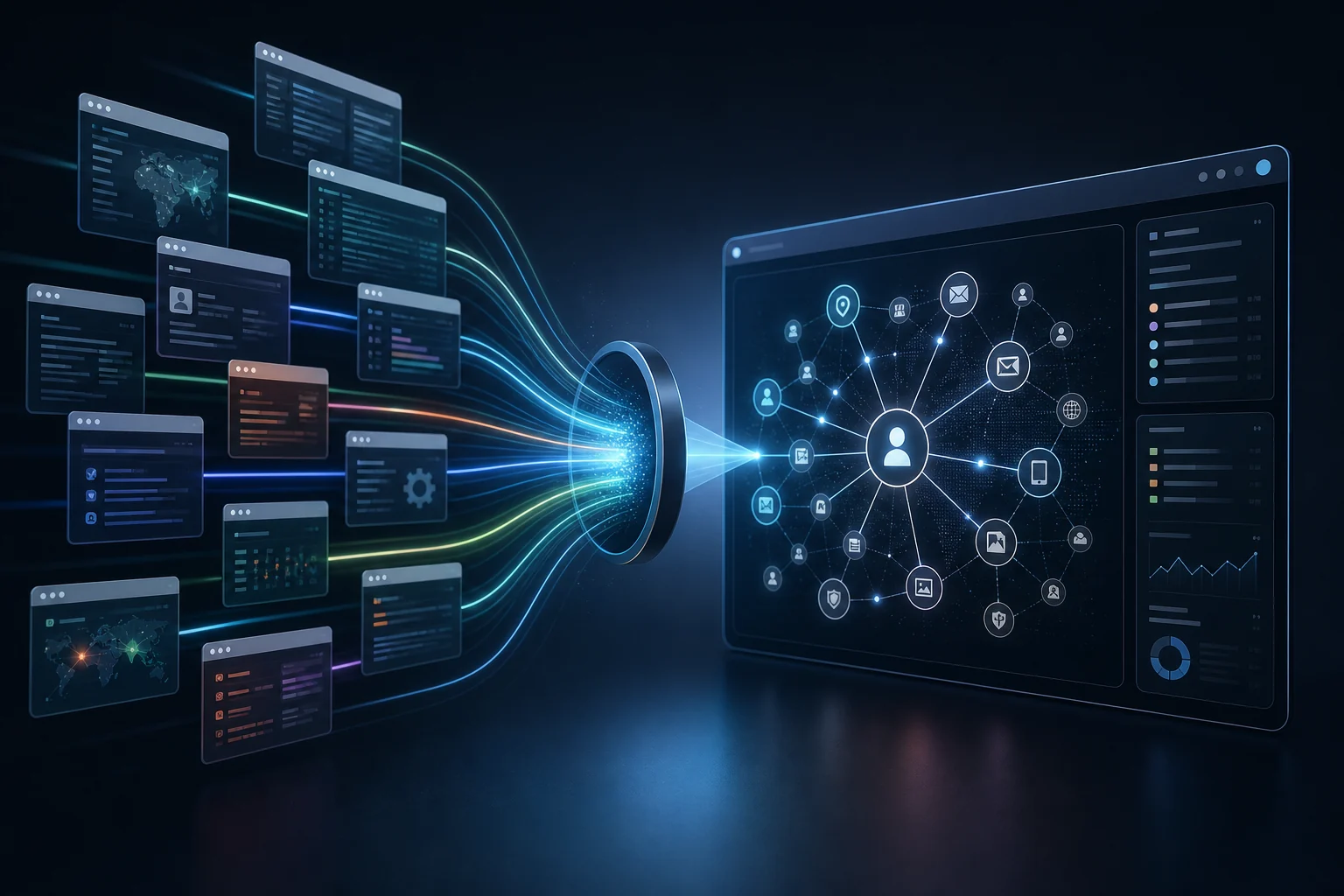
The best OSINT aggregation tool depends on the question: shortlist Y2 for recurring intelligence and investigation context, Maltego for link analysis, Shodan for internet-facing infrastructure, and VirusTotal for relationships between technical observables. Evaluate specialist intelligence platforms when their collections match a requirement those tools do not cover.
This guide is published by Y2. We reviewed the linked first-party product descriptions on September 15, 2026. The shortlist reflects our assessment of workflow fit, not a hands-on accuracy ranking. “Best for” identifies a reason to evaluate a product; it does not establish superiority.
Compare the job before comparing the tool
An OSINT aggregation tool brings external intelligence into a searchable or analyzable workspace. Products differ in what they collect, how they connect records, and what an analyst can retrieve. A source-count headline cannot tell you whether a particular supplier, language, or incident is covered.
| Research job | Candidates to evaluate | A useful first test |
|---|---|---|
| Follow an industry, country, or supplier and produce recurring briefs | Y2 | Create a narrow profile and check the first report's cited evidence |
| Explore relationships from a known entity | Maltego Graph | Trace a known relationship and inspect the data behind each step |
| Investigate internet-facing services | Shodan | Check a known, authorized asset and its observation dates |
| Connect files, URLs, domains, and IP addresses | VirusTotal Graph | Follow a known observable and validate the linked artifacts |
| Add specialist threat intelligence to a security program | Recorded Future, Flashpoint | Test the required collection and integration in the proposed plan |
| Research entities and regional information | Babel Street | Evaluate specific languages, regions, identities, and provenance |
| Investigate public online identities and networks | ShadowDragon | Check an authorized case and the evidence behind entity matches |
Several products can support the same task. Evaluate the selected module and data entitlement, not just the company name.
Y2: recurring research and investigation context
Y2 combines a Situation Room, custom research profiles, and private Projects. Profiles create recurring topic reports. Projects organize your own chats, documents, citations, graphs, and other evidence around an objective.
The OSINT API documents event, geographic, country, and source-health surfaces; the Intel API provides entity and incident investigation paths. Source cadence and coverage vary. Check the source catalog for the feeds your decision actually needs rather than assuming every source updates in real time.
Evaluate it for: recurring briefings that lead to follow-up investigation or agent access.
Check before choosing: custom profiles start with Lite, while new API keys require Pro or Elite. Projects remain owner-private, including in Elite organizations. Review pricing and run the intelligence briefings recipe.
Maltego: entity and link analysis
Maltego Graph brings data into visual relationship investigations, with connectors and access to external or internal sources. Maltego's wider product lineup also includes monitoring and evidence tools, so evaluate the exact combination you need.
Evaluate it for: cases that begin with a known entity and require inspecting connected records.
Check before choosing: which connectors, data allowances, and workflow tools are included in the current plan. Count analyst review and source validation in the pilot rather than judging the number of graph nodes alone.
Shodan: internet-facing infrastructure
Shodan's developer platform exposes its data through APIs, including streaming notifications and command-line access. This makes it a candidate for infrastructure searches and integrations that track observations over time.
Evaluate it for: questions about known internet-facing services and assets.
Check before choosing: observation age, address coverage, API limits, and the rights your workflow requires. An observed service does not by itself prove ownership, exposure, or compromise. Keep the asset context and scope of the investigation explicit.
VirusTotal: technical observables and their relationships
VirusTotal Graph connects artifacts such as files, URLs, domains, and IP addresses in an investigation. It also documents a Graph API.
Evaluate it for: following relationships between technical observables and assembling a reviewable threat map.
Check before choosing: the product access needed for your intended investigation and API use. A relationship is a lead to validate; a graph connection alone does not establish malicious intent.
Recorded Future: intelligence for security programs
Recorded Future's platform describes an Intelligence Graph connecting external sources and internal telemetry, with security integrations and expert services. Its product and service selection merits evaluation when intelligence must become part of an established security workflow.
Evaluate it for: a program with defined threat-intelligence requirements and integration needs.
Check before choosing: the exact collection, modules, API entitlement, and service scope in the proposal. Ask for a demonstration against your own reference cases and security tools.
Babel Street: entity and regional data
Babel Street Data offers regional and entity information as well as custom collection. Its documented offering includes public information about individuals and businesses, localized sources, and historical data.
Evaluate it for: requirements where a particular region, language, or entity dataset matters.
Check before choosing: coverage of your actual target regions, how entity matches are supported, and what the selected contract permits your team to retain, export, and integrate.
Flashpoint: specialist threat intelligence
Flashpoint Ignite is a threat-intelligence platform to include when assessing specialist security collections. Evaluate the chosen product through the evidence and delivery requirements of your program.
Evaluate it for: security investigations requiring collections beyond a general news or event feed.
Check before choosing: whether the required sources, history, exports, and integrations are included in the proposed package. Use a concrete reference case to inspect what the analyst receives.
ShadowDragon: public online investigations
ShadowDragon's Horizon platform uses SocialNet for open-source data collection, transformation, and correlation, with an API integration path.
Evaluate it for: investigator-led work involving public online identities and their relationships.
Check before choosing: the source scope, evidence supporting each identity match, and access required for your workflow. Test an ambiguous name as well as an easy known match.
A practical evaluation worksheet
Give each candidate the same question, time window, and known examples. Track outcomes rather than broad “yes/no” feature checks:
| Criterion | Evidence to retain |
|---|---|
| Coverage | Expected records found, missed records, filters, and source scope |
| Provenance | Original source URL and the passage supporting each material finding |
| Freshness | Event time, publication time, observation time, and retrieval time where available |
| Identity quality | Confirmed matches, false matches, and unresolved aliases |
| Investigation effort | Analyst minutes needed to verify and organize the result |
| Integration | A representative documented read, pagination behavior, and error response |
| Economics | Plan, data entitlement, quotas, integration costs, and review effort |
Do not treat an empty result as confirmation that nothing happened. Inspect source availability and filters. Likewise, multiple articles can repeat the same original source; count corroboration by evidence, not by the number of URLs.
Which guide should you use next?
- For a recurring research product, follow intelligence briefings.
- For an agent integration, use the MCP server for OSINT walkthrough.
- For security-platform selection, read Palantir alternatives for smaller teams.
- For feed curation and delivery, compare Feedly alternatives.
- To evaluate Y2, review pricing and choose one workflow with a result you can independently check.